




30 Day
Sound Stops Stress Study: Evaluating the WAVwatch Effect
| STUDY TITLE | Sound Stops Stress Study: Evaluating the WAVwatch Effect |
|---|---|
| Submitted under umbrella | |
| Date submitted |
May 2, 2025 |
| End date |
There is no pre-specified end date and sub-studies remain open long-term. |
| Language |
English |
| Efforia AI IRB approval recommendation | |
| Recruitment page preview | |
| Author edit | |
| Informed consent | |
| Study author |
Linda Bamber, Joseph Bamber, John Bamber, Matthew Amsden |
| Principal investigator |
Matthew Amsden |
| Sub-Investigator for Adverse Events |
Dr. Viral Patel |
| Description |
Turn down the volume on stress! Dive into the Sound Off Stress Study and discover if WAVwatch 2.0—a sleek, wearable sound frequency device—can fine-tune your mental harmony. Experience a non-clinical symphony for your mind. Join us to explore potential stress and everyday anxiety relief and see if WAVwatch is your key to a calmer, more balanced life. Ready to resonate with relaxation? Sign up today and be part of the sound solution! |
| Participant engagement length |
30 Days |
| Sponsor |
This study is made possible by your payment to cover all supplies and expenses required to participate. |
| Cost to participant |
$597 |
| Included products & services |
WAVwatch 2.0 – Graphite: $697
|
| Outcome measures |
Perceived Stress Scale (Past Week Version) General Anxiety Disorder (GAD-7) Depression, Anxiety and Stress Scales (DASS-21) Survey NIH Toolbox® Item Bank v3.0 – General Life Satisfaction (Ages 18+) |
| Methodology |
Single Arm longitudinal where participants act as their own control |
| Basic or advanced dissemination plan |
Basic |
| Deviation from recruitment approach |
No |
| Deviation from statistical approach |
No |
| Will study include “more about you questions” |
No |
| Clinicaltrials.Gov |
Yes |
| Committment to list findings on clinicaltrials.Gov |
Yes |

 Preview
 This document is prepared with the assistance of AI, but is reviewed by a human.
Rational & Study Design
Why I created this study:
In a world increasingly dominated by stress and everyday anxiety, the quest for innovative solutions is paramount. Emerging research suggests that sound frequency devices can positively influence mental states, and social media buzz has been rife with testimonials of sound therapy's calming effects. With this study, we aim to scientifically evaluate WAVwatch 2.0's potential in reducing stress and anxiety, validating or debunking the claims. It's time to tune into the science of serenity.
My Objective for You:
My objective is to empower you with precise data on how the WAVwatch 2.0 can potentially decrease your stress and everyday anxiety levels. By participating, you will receive personal insights into your mental wellness journey, allowing you to see firsthand if this sleek, wearable technology harmonizes with your life, granting you the peace and balance you seek.
Aims & Objectives:
This study aims to assess the effectiveness of WAVwatch 2.0 in reducing stress and everyday anxiety levels, while enhancing general life satisfaction. Participants will gain personalized insights, enabling informed decisions on future stress management strategies and financial investments in wellness tech.
Significance & Impact:
This study could revolutionize personal stress management by providing evidence-based insights into sound frequency technology's role in mental wellness. While WAVwatch 2.0 may not suit everyone, the significance lies in offering a potential alternative for non-clinical anxiety relief, helping participants make informed wellness choices.
The Intervention
Included Products & Services
Product Name: WAVwatch 2.0 – Graphite
Quantity included: 1
Price: $697.00
Product Description: Everything in the universe (and your body) vibrates at a unique frequency. Research also suggests that action of nerves is based on sound pulses. Sound frequencies may help restore harmony through gentle, non-invasive energy. WAVwatch 2.0 can be used for Soreness Better Sleep Energy Relaxation Detox Weight Management Mental Clarity Emotions Stress Swollen Joints WAVwatch makes self-care effortless—just wear it and let the frequencies play!
Product Image:
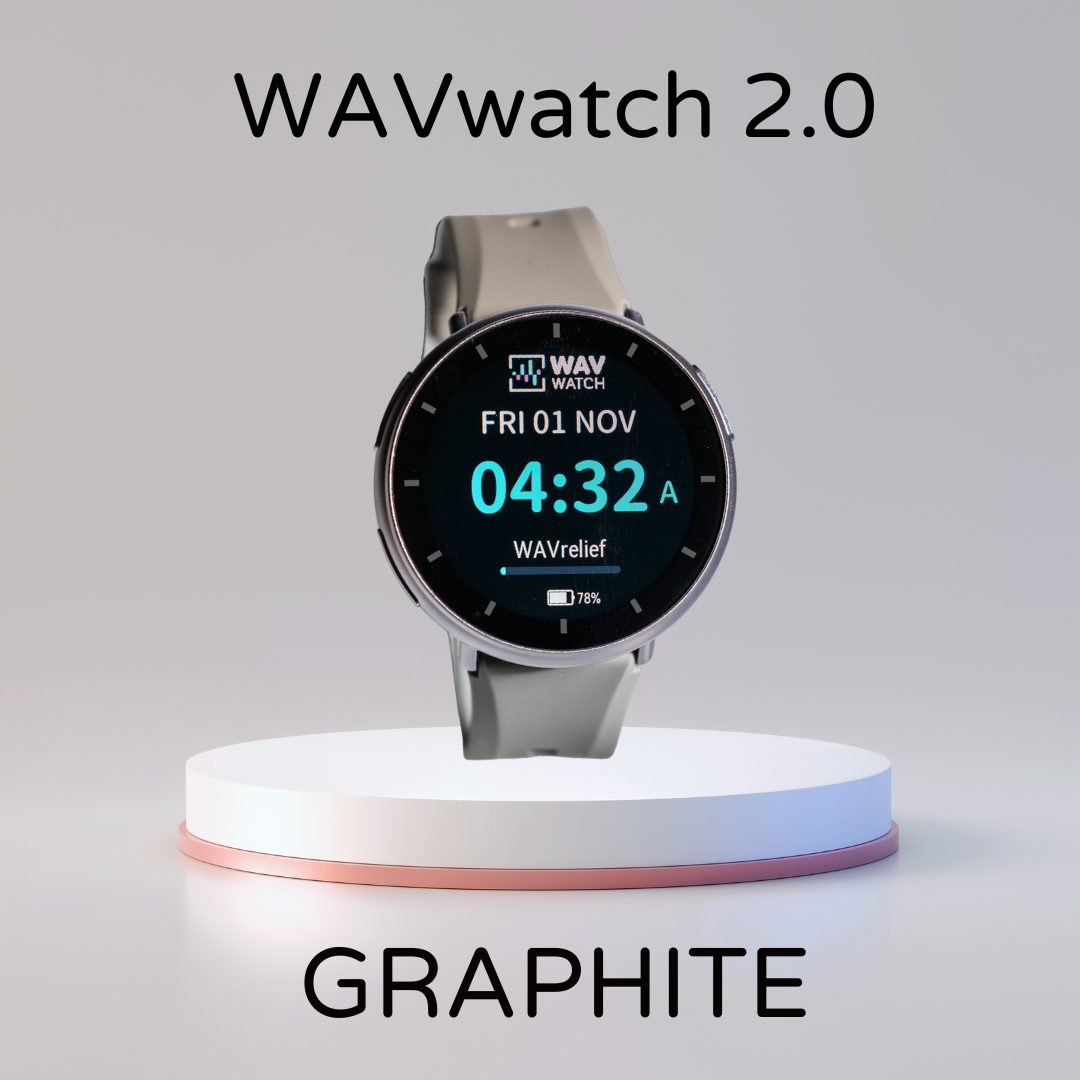
Ingredients: Internal Use Only
Product Safety:
**Product Title:** WAVwatch 2.0 – Graphite Edition
**Product Description:**
Introducing the WAVwatch 2.0 – Graphite Edition, a revolutionary wearable device designed to harness the power of sound frequencies to promote wellness and enhance your quality of life. Drawing on the fascinating concept that everything in the universe, including the human body, vibrates at unique frequencies, WAVwatch 2.0 offers a holistic approach to health and wellbeing.
**Key Features:**
- **Holistic Health Tool:** Utilizes sound frequencies to help restore the body's natural harmony, influenced by ongoing research into the bioacoustic impact of nerve actions.
- **Versatile Applications:** Designed to assist with a range of physical and mental conditions including soreness, sleep disturbances, energy levels, relaxation, detoxification, weight management, mental clarity, emotional balance, stress reduction, and swollen joints.
- **Non-Invasive Therapy:** Offers a gentle, non-invasive form of energy therapy that works by merely wearing the device, allowing the embedded technology to interact naturally with your body's frequencies.
- **User-Friendly Design:** The sleek, modern Graphite design is not only stylish but also comfortable and discreet enough to wear all day, every day.
- **Ease of Use:** With simplicity at its core, the WAVwatch 2.0 requires no complex setup or maintenance. Simply put it on and let it work its magic.
**Benefits:**
- **Self-Care Simplified:** WAVwatch 2.0 makes maintaining daily wellness as easy as wearing a watch. It's designed for anyone seeking a natural boost to their body’s ability to heal and maintain balance.
- **Science-Backed Approach:** Inspired by cutting-edge research in the field of bioacoustics, the WAVwatch 2.0 taps into the natural science of sound frequencies to support your body's health.
- **Suitable for Everyone:** Whether you're an athlete looking to speed up recovery, a busy professional needing stress relief, or anyone in between, WAVwatch 2.0 is your partner in personal health and wellness.
Embrace the future of self-care and experience a new level of well-being with the WAVwatch 2.0 – Graphite Edition. Just wear it and let the frequencies play their part in your journey towards a healthier, more balanced life.
The WAVwatch sound frequency therapy device employs acoustic waves absorbed through the skin to promote wellness, with manufacturers and users reporting minimal safety risks. Below is a detailed safety and side effect profile based on available information:
Safety Profile
Design Safety
Non-invasive & drug-free: Uses low-wave acoustic frequencies absorbed through the skin and bones, avoiding synthetic electromagnetic fields or internet connectivity.
Water-resistant (not waterproof): Suitable for light exposure but not submersion.
No interference with medical devices: Reported compatible with pacemakers and grounding pads due to acoustic (not electrical) frequencies.
Precautions
Avoid during high-intensity activities or excessive sweating to prevent damage.
Adjust volume to levels 1–3 (or 4–8 per some guides) for safe absorption.
Not FDA-approved; labeled experimental and non-medical.
Contraindications
Known allergies to metals and plastics used in connected health devices.
Pregnancy: Consult a physician before use.
Metallic implants/prosthetics: Caution advised for sound therapy (specific to singing bowls in sources).
Sound-induced epilepsy: Potential risk with sound vibrations.
Reported Side Effects
Manufacturers and most users claim no adverse effects, even with incorrect frequency selection. However:
Minor discomfort: Rare reports of temporary tingling or warmth during use (implied in general sound therapy context).
Warranty & Damage Risks
Covers defects for 1 year; optional extended warranty for accidents, spills, or screen damage.
Excludes theft, loss, or shipping-related issues.
Key Considerations
Individual variability: Effectiveness and tolerance may vary; users are advised to test frequencies cautiously.
Hydration: Recommended to drink water during sessions to aid frequency absorption.
The WAVwatch is marketed as low-risk, but users should consult healthcare providers for specific medical conditions and adhere to usage guidelines.
Study Design & Methodology
Inappropriate Participants & Inclusion/Exclusion
Under the Efforia minimal risk protocol, within which this study is reviewed for safety and human subjects ethics, all individuals over the age of consent are eligible, however, it is the responsibility of participants to determine if their unique circumstances make participation inappropriate.
Here is a table indicating individuals who should avoid or critically evaluate their participation in the WAVwatch 2.0 trial:
| Category of Individual | Contraindications | Reason |
|---|---|---|
| Individuals with skin sensitivities | Known skin conditions like dermatitis or allergies to materials | Increased risk of skin reactions, such as rashes or irritation due to contact with the device. |
| Individuals with auditory conditions | Pre-existing tinnitus or hearing issues | Potential for worsening auditory effects, including tinnitus or hearing loss. |
| Individuals with severe anxiety or mental health disorders | Severe anxiety disorders or psychological conditions | Risk of heightened anxiety or dependency due to psychological effects. |
| Pregnancy | Unknown Risks | There is limited research on the impact of WAVWatch on the fetus. |
| Individuals prone to irritation or frustration | Low tolerance for frustration or device-related irritability | High likelihood of frustration and irritation, which may diminish with continued use but could impact quality of life. |
These categories help ensure that participants consider whether their specific health conditions or personal circumstances may increase the risk of adverse effects when using the WAVwatch 2.0. Participants are advised to consult with healthcare professionals before enrolling in the study.
Study Design & Experience
Daily Activity: Use the WAVwatch at the time you're most likely to feel stressed, selecting a calm-supportive frequency from the Stress & Relief Program. Set volume, secure the watch on your non-dominant wrist, and press play. Use daily during high-stress times, staying hydrated and limiting use to 6–8 hours a day.
Assesments and frequency:- Various Scales: Complete the General Anxiety Disorder (GAD-7), Perceived Stress Scale, Depression, Anxiety, and Stress Scales (DASS-21), and NIH Toolbox® Item Bank v3.0 – General Life Satisfaction assessments as part of the study.
The Sound Stops Stress Study: Evaluating the WAVwatch Effect is designed as a single-arm observational trial where participants serve as their own controls to explore the efficacy of the WAVwatch 2.0, a wearable sound frequency device, in reducing stress and anxiety. Participants will engage in a daily routine using the device to assess its impact on their mental well-being. The study aims to provide initial insights or a "signal" on whether this non-clinical intervention can effectively alleviate stress, thus offering a preliminary indication of potential positive outcomes. This trial will also gather valuable safety data, contributing to the understanding of the device's safety profile, which is currently limited.
The Sound Off Stress Study invites participants to take an active role in managing their anxiety through the WAVwatch 2.0 by utilizing sound frequencies intended for stress relief. Participants will use the device for 64 minutes daily, collecting data about their individual experiences and responses. The study's methodology allows researchers and participants alike to assess the practical benefits of the WAVwatch in real-time, offering personalized feedback throughout the process. The study's design emphasizes the importance of participant consistency, as regular use will enhance the clarity and utility of the collected data. By the study's conclusion, participants will receive detailed progress reports to aid their understanding and inform future decisions regarding stress management.
Participants are encouraged to incorporate the WAVwatch 2.0 into their daily routine, using it during periods of heightened stress or anxiety. The study provides a daily check-in guide to help maintain consistency. Participants will choose a calming frequency, set an appropriate volume, secure the device on their wrist, and engage the playback feature. The trial limits usage to 6-8 hours per day to optimize effectiveness and battery life. Through this consistent daily engagement, participants will contribute to a meaningful data set that may indicate the WAVwatch's efficacy. Should the study yield positive results, suggesting the WAVwatch effectively reduces stress, more comprehensive and robust study designs will be pursued to further validate these initial findings. For further details on this protocol, please refer to the "Minimal Risk Umbrella protocol."
Expected sample size:Thank you for submitting the protocol titled "Sound Stops Stress Study: Evaluating the WAVwatch Effect" for review. As an IRB reviewer, it is important to ensure that the statistical plan for your study is consistent with the Minimal Risk Umbrella protocol under which it is categorized.
Your study involves the assessment of stress and anxiety relief using the WAVwatch 2.0 device, and you have outlined a plan to measure outcomes using several validated tools: the General Anxiety Disorder (GAD-7) survey, the Depression, Anxiety and Stress Scales (DASS-21) survey, the NIH Toolbox® Item Bank for General Life Satisfaction, and the Perceived Stress Scale (Past Week Version).
The statistical plan appears to be in alignment with the umbrella protocol, as these measures will be used to evaluate the baseline and outcome scores, thereby assessing the effectiveness of the WAVwatch 2.0 device in reducing stress and anxiety. The focus on both baseline and outcome periods helps in understanding any changes or improvements in participants' mental health status.
For reviewers who wish to delve deeper into the statistical methodologies and ensure they are consistent with the guidelines set within the Minimal Risk Umbrella protocol, it is recommended to review the statistical plan in detail within the context of the umbrella protocol. This review will ensure that any statistical analyses, including the handling of data and interpretation of results, align with the minimal risk standards and ethical considerations laid out in the overarching protocol.
Please ensure that all statistical analyses are transparent, justified, and appropriately account for the study's design and objectives. This will not only facilitate a thorough review but also uphold the integrity and validity of the study findings.
Statistical Analysis Plan
Limitations & Justification
The single-arm observational trial investigating the WAVwatch 2.0's efficacy in stress and anxiety reduction is inherently limited by the absence of a control group, which introduces susceptibility to bias and challenges in establishing causality. To mitigate this, the study employs an expectations questionnaire to quantify participant bias, offering insights into how expectations may influence outcomes. Despite these efforts, the lack of a control group remains a notable limitation, as it restricts the ability to definitively attribute changes in stress and anxiety levels directly to the intervention. However, the study is designed as a preliminary signal detection study, meaning that its primary goal is to identify potential associations which, if promising, will pave the way for more rigorous, controlled trials in the future.
Additionally, the study's sample size and statistical methodology are carefully structured to address potential biases and improve data interpretation. Stratification by participant demographics allows for a nuanced analysis of how different subgroups may respond to the WAVwatch 2.0, providing a more comprehensive understanding of its effectiveness across diverse populations. This approach is aligned with the Minimal Risk Citizen Science Umbrella Protocol's objective to democratize research by supporting inquiries and researchers that may otherwise be overlooked. By prioritizing inclusivity and diversity, the study aims to deliver insights that are both scientifically valuable and socially relevant, aligning with the broader mission of Efforia to make clinical research more accessible and equitable.
Finally, while the study's primary focus is on identifying initial signals of effectiveness, it also serves to empower participants with personalized insights into their mental wellness journeys. By measuring changes in standardized metrics such as GAD-7, DASS-21, and NIH Toolbox® scores, participants can better understand their responses to the WAVwatch 2.0, enabling more informed decisions about future stress management strategies. This personalized feedback loop not only enhances participant engagement but also underscores the potential of sound frequency technology as a non-invasive alternative for managing stress and anxiety. Should the study yield positive results, subsequent research will aim to validate these findings through more robust study designs, ensuring that any identified benefits are rigorously tested and substantiated. For further details on the study's framework and objectives, interested individuals are encouraged to consult the Minimal Risk Umbrella Protocol.
Human Subjects Ethics
Suitability Under Minimal Risk Umbrella Protocol
The "Sound Stops Stress Study: Evaluating the WAVwatch Effect" appears to be a suitable candidate for inclusion under the minimal risk umbrella protocol. The study seems to aim at evaluating the impact of a consumer health device, the WAVwatch, on stress levels, which falls under the broad "health and wellness" domain. This aligns with the umbrella protocol's focus on non-regulated consumer health devices intended to enhance general health and wellness within normal ranges. The study likely involves a longitudinal design, as it aims to measure stress over time, and does not suggest any interventions that would require a physician’s diagnosis or prescription, nor does it involve vulnerable populations or any form of deception or blinding.
Additionally, the study does not appear to involve more than minimal risk to participants, as the intervention—a sound-based stress management device—is presumably classified under "Generally Recognized as Safe" (GRAS) interventions. It is unlikely to require more than two blood draws or any other invasive procedures. The study also does not seem to include any elements that are illegal or require regulatory approval, nor does it involve comparative study designs or specific eligibility criteria that go beyond the broad scope defined by the umbrella protocol. Therefore, based on the information provided, the study complies with the requirements and restrictions set by the minimal risk umbrella protocol.
Suitability for Pay to Participate Model
In evaluating the appropriateness of allowing participants to pay for the WAVwatch 2.0 in the Sound Stops Stress Study, several factors suggest it is reasonable to do so. The WAVwatch 2.0 is a wearable sound frequency device that is legally available on the open market in the United States, where individuals are generally willing to invest in such wellness and lifestyle products to enhance their mental well-being. This product is marketed similarly to other consumer electronics and wellness devices, which are often sold at comparable or even higher price points, indicating a consumer base accustomed to these costs. The WAVwatch 2.0, as part of this study, offers additional value through structured exploration of its potential benefits on stress and anxiety relief, facilitated by expert oversight and data collection, which participants might not have access to outside the study. This enhances the perceived value beyond merely purchasing the device independently.
Moreover, the target demographic for such wellness technology typically includes consumers who can afford such discretionary spending without experiencing significant financial hardship. The study's design suggests careful consideration of informed consent and participant autonomy, ensuring that individuals are well-informed about the study's purpose, potential outcomes, and associated costs. This transparency, combined with the voluntary nature of participation, mitigates concerns about undue influence or exploitation. Additionally, the study's structure aims to prevent buyer's remorse by providing participants with comprehensive information and the opportunity to make an evidence-based decision regarding their involvement, thus respecting their autonomy and supporting their decision-making process.
Human Subjects Protection Questionnaire
Beneficence
Is there a description, unambiguous research question, and purpose? Yes. The study clearly outlines the research question and purpose, focusing on evaluating the effectiveness of a specific product or service available to participants who have already purchased it.
Is the study built on what is known already? Yes. The study builds on existing knowledge by exploring the effects of a product or service that is already available on the market, providing an opportunity to gather real-world evidence.
Will the study provide meaningful answers to the research question? Yes. The study is designed to provide meaningful answers not only in terms of generalizable results but also in delivering relevant outcomes to the specific participants who have used the product or service.
Will the study provide valid answers to the research question? Yes. The study employs a structured methodology to ensure the validity of the results, allowing for reliable conclusions to be drawn about the product or service in question.
Non-maleficence
Are participants recruited with justifiable inclusion and exclusion criteria? Yes. Any individual who has already purchased the product is eligible to participate, and Efforia ensures that participants are informed of any risks through the informed consent process, allowing them to assess whether the study is appropriate for them.
Does the research team have the experience, skills, facilities, and time to complete the study? Yes. The research team, led by Principal Investigator Matthew Amsden, possesses extensive experience in decentralized trial innovation and management, supported by the Efforia platform's infrastructure and Dr. Viral Patel's expertise to handle any adverse events.
Is there a fair balance of benefits and harms (risks) for all with an interest in the study? Yes. The study's unique approach, as outlined in the minimal risk protocol, provides participants with added value at no additional cost beyond their initial purchase, ensuring a fair balance of benefits and risks.
Will participants receive appropriate care both during and after the study? Yes. Participants are advised to seek their own medical care in the event of an adverse event, but the minimal risk nature of the study and its market availability means that participation offers enhanced monitoring and care.
Is personal data handled appropriately (confidentiality)? Yes. The handling of personal data is in line with the Minimal Risk Umbrella protocol, ensuring confidentiality and appropriate data management.
Autonomy
Have participants been offered a fair choice through the information they are given (presented in plain English) and consent process? Yes. The informed consent document provides participants with clear, comprehensive information about the study, enabling them to make informed decisions regarding their participation.
Has the research incorporated patient and participant views? Yes. Efforia's citizen science clinical trial platform inherently incorporates participant views, with this study designed to include participant feedback and encourage ongoing input through the consent process.
Justice
Are there fair payments for participation and financial recompense in case of harm? Yes. While participants pay to participate, they receive a valuable product and health outcome tracking, with the understanding that medical care is their own financial responsibility in case of adverse events.
Do participants have access to an independent complaints procedure (or advocate)? Yes. Participants can contact Efforia's support for any concerns or complaints, with the informed consent providing independent ethics review board numbers for additional avenues.
Will the project be registered and results reported in the public domain? Yes. Efforia is committed to transparency, providing participants with immediate access to their personal results and contributing to generalizable results for broader credibility.