


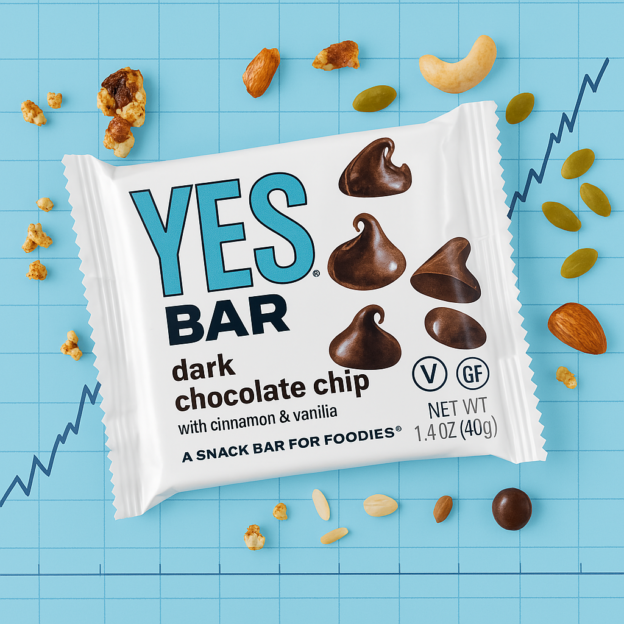
7 Day
How Does YES Bar Affect Blood Glucose Levels?
| STUDY TITLE | How Does YES Bar Affect Blood Glucose Levels? |
|---|---|
| Submitted under umbrella | |
| Date submitted |
May 2, 2025 |
| End date |
There is no pre-specified end date and sub-studies remain open long-term. |
| Language |
English |
| Efforia AI IRB approval recommendation | |
| Recruitment page preview | |
| Author edit | |
| Informed consent | |
| Study author |
Brennan Spreitzer, Matthew Amsden |
| Principal investigator |
Matthew Amsden |
| Sub-Investigator for Adverse Events |
Dr. Viral Patel |
| Description |
Curious to see if there is a sweet treat that doesn't spike your blood sugar (avoiding the energy crash, inflammation, and weight gain)? This study uses the Abbott Lingo CGM to see how your blood glucose levels responds to YES Bar—an all natural, gluten-free, plant-based bar that tastes like dessert. You'll track your levels before and after eating it to see if it fits into your metabolic health. (iOS Only) |
| Participant engagement length |
7 Days |
| Sponsor |
This study is made possible by your payment to cover all supplies and expenses required to participate. |
| Cost to participant |
$67 |
| Included products & services |
Yes Bar 6-Bar Variety Pack: $17
Lingo Continuous Glucose Monitor (CGM) & App by Abbott: $49
|
| Outcome measures |
Baseline Blood Glucose Monitoring for a Specific Food After Food Glucose Follow Up |
| Methodology |
Single Arm longitudinal where participants act as their own control |
| Basic or advanced dissemination plan |
Basic |
| Deviation from recruitment approach |
No |
| Deviation from statistical approach |
No |
| Will study include “more about you questions” |
Yes |
| Clinicaltrials.Gov |
Yes |
| Committment to list findings on clinicaltrials.Gov |
Yes |

 Preview
 This document is prepared with the assistance of AI, but is reviewed by a human.
Rational & Study Design
Why I Created This Study:
I’m the founder of Yes Bar, and over the years, I’ve heard countless people tell me the same thing: “Your bars don’t spike my blood sugar like other snacks do.” That’s amazing to hear—but it’s still anecdotal. As proud as I am of those stories, I wanted real data to back it up. So I created this study to find out for sure.
Using Abbott’s new Lingo CGM (a continuous glucose monitor), we’re tracking how Yes Bar affects blood sugar in real life, in real people. No marketing fluff—just science and snacks. This study isn't just for me to market Yes Bar. Everyone is unique - so the study is also for you, to see how Yes Bar can fit into your metabolic health. Please note, the Abbott Lingo is currently only available for the iPhone. (Sorry Android users. We know Abbott is working on it).
What’s In It for You: By joining this study, you’ll get a unique look at how your body responds to a Yes Bar. You’ll wear a CGM and track your own blood sugar curve—so you can see for yourself whether Yes Bar really lives up to the hype. It’s not just about proving something for me—it’s about giving you insights into your own metabolic health. As a token of our appreciation after running at least four individual experiments with Yes Bar over 7 days, we'll send you a $17 gift card you can use for your next purchase with us.
Study Goal:
We’re testing how blood sugar levels respond after eating a Yes Bar, using the Abbott Lingo CGM. The goal? To find out if Yes Bar is a snack that satisfies without the spike. We're also, with Efforia, assessing whether a consumer Continuous Blood Glucose monitor can be effectively used in studies designed to determine the impact of a specific food or habit on glucose levels.
Why It Matters:
This study bridges the gap between what people say and what the data shows. If the results confirm what I’ve heard all along, it could shift how we think about marketing our bar, But more importantly, it gives you an opportunity to see how Yes Bar can fit into a healthy diet—especially for anyone trying to avoid those mid-day crashes and sugar swings. You’ll walk away with real, personalized data—and maybe a new go-to snack.
The Intervention
Included Products & Services
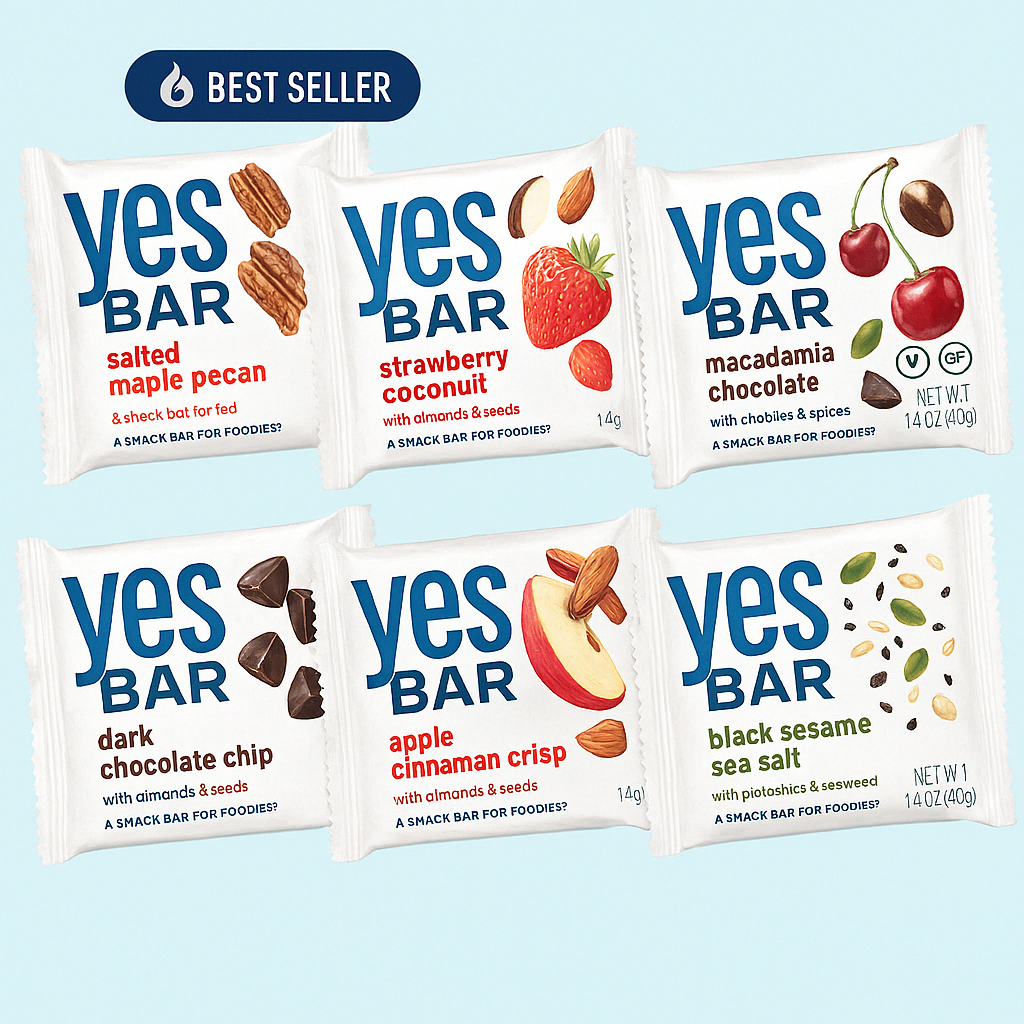
Product Name: Yes Bar 6-Bar Variety Pack
Quantity included: 1
Price: $17.00
Product Description: Want to say YES, but afraid of making a one-flavor commitment? Our six-flavor sampler gives you the chance to try all of our YES Bar flavors in one box. 1 Bar of Macadamia Chocolate 1 Bar of Apple Cinnamon Crisp 1 Bar of Strawberry Coconut 1 Bar of Salted Maple Pecan 1 Bar of Dark Chocolate Chip 1 Bar of Black Sesame Sea Salt
Product Image:
Ingredients:
Refer to each product for full list of ingredients
1 Bar of Macadamia Chocolate
1 Bar of Apple Cinnamon Crisp
1 Bar of Strawberry Coconut
1 Bar of Salted Maple Pecan
1 Bar of Dark Chocolate Chip
1 Bar of Black Sesame Sea Salt
CONTAINS: Tree Nuts (Almond, Pecans, Cashew, Walnuts, Macadamia and Coconut), and Sesame.
Made in a gluten free certified facility that handles eggs, milk, peanuts, soy, and tree nuts. May contain nut shell or pit fragments.
Product Safety:
YES Bars are produced in a HAACP-certified, gluten-free facility that adheres to strict allergen control protocols. The bakery is certified kosher (EarthKosher DE) and operates as a dedicated gluten-free facility with batch-level verification. YES Bar meets or exceeds FDA guidelines for gluten-free labeling and allergen disclosure.
Allergen Management: While free from gluten, dairy, soy, peanuts (except Peanut Butter Dark Chocolate flavor), grains, and refined sugars, the bars contain tree nuts (almonds, cashews, walnuts, macadamia) and sesame. Cross-contact risks exist due to shared equipment handling eggs, milk, peanuts, and soy.
Ingredient Transparency:
Composition: Primary ingredients include organic nuts, seeds, dried fruits, and low-glycemic sweeteners (maple syrup, coconut nectar).
Additive-Free: No preservatives, synthetic sugars, or processed proteins are used.
Sustainability: Upcycled nuts reduce food waste, and packaging is recyclable (compostable by 2027).
Potential Concerns
Allergic Reactions:
Tree Nut/Sesame Risk: The Apple Cinnamon Crisp flavor contains almonds, cashews, walnuts, macadamia, and sesame.
Cross-Contact: Facility handles peanuts, soy, eggs, and milk, posing trace exposure risks.
Physical Hazards:
Nut Fragments: Disclosed as potential presence of shell/pit fragments.
Contrast with Recalls: Unlike recent Class II FDA recalls for metal-contaminated granola bars, YES Bar has no reported contamination issues.
Nutritional Considerations:
Sugar Content: 6-9g per bar from natural sources (no refined sugars).
Caloric Density: Nut-heavy formulation may require portion awareness for calorie-sensitive consumers.
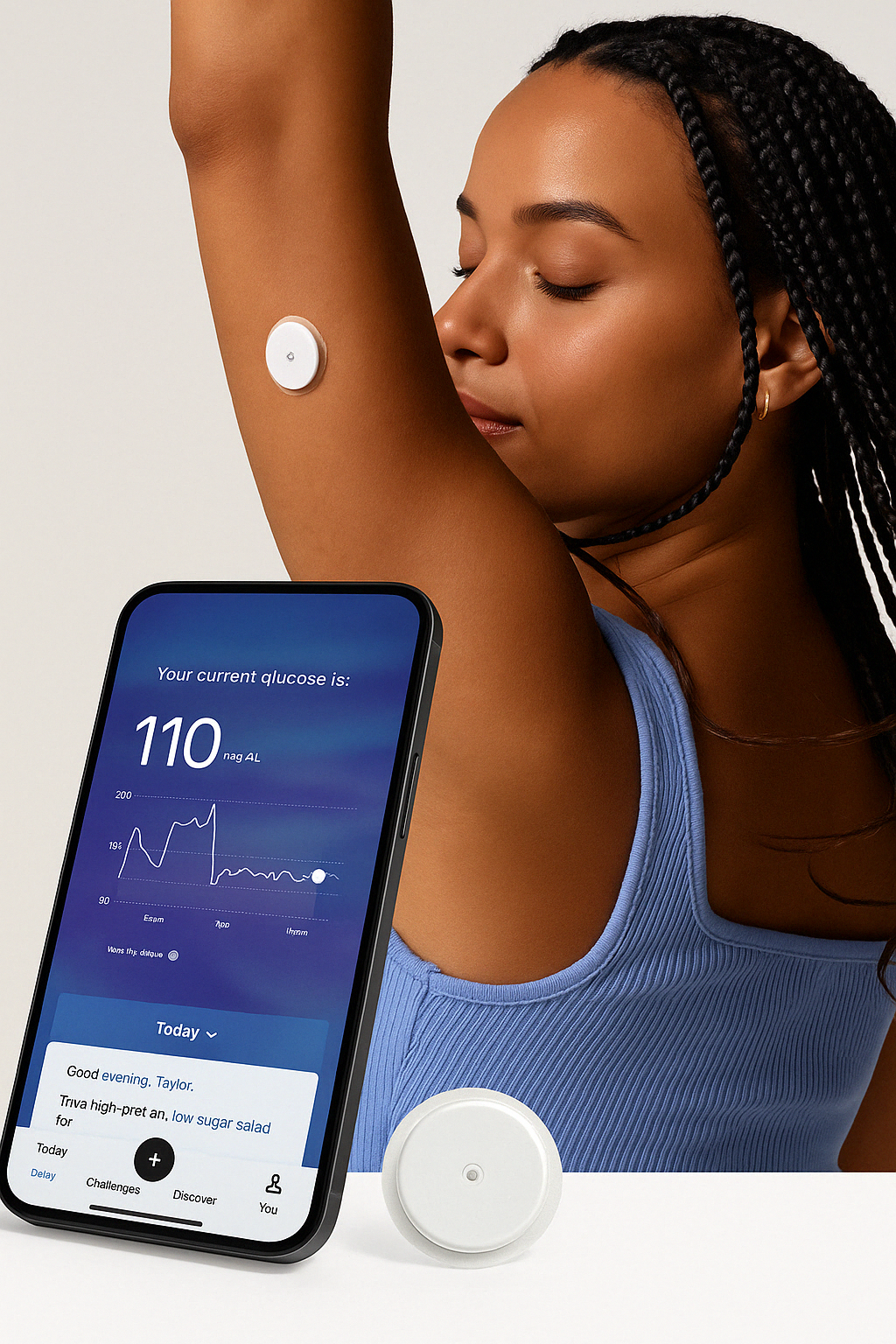
Product Name: Lingo Continuous Glucose Monitor (CGM) & App by Abbott
Quantity included: 1
Price: $49.00
Product Description: The Abbott Lingo CGM is an over-the-counter biosensor worn on the upper arm for up to 14 days, offering real-time glucose tracking via a dedicated iOS app. Designed for adults not on insulin, it provides personalized insights, habit-building coaching, and the **Lingo Count** metric to quantify glucose spikes. The app includes food/exercise logging, Apple Health integration, and challenges to improve metabolic health.
Product Image:
Ingredients: FDA 510k Summary: https://www.accessdata.fda.gov/cdrh_docs/pdf23/K233655.pdf
Product Safety:
Minor irritation at usage site.
Results from the device may exacerbate eating disorders in individuals prone to them.
Study Design & Methodology
Inappropriate Participants & Inclusion/Exclusion
Under the Efforia minimal risk protocol, within which this study is reviewed for safety and human subjects ethics, all individuals over the age of consent are eligible, however, it is the responsibility of participants to determine if their unique circumstances make participation inappropriate.
Based on the risks informed consent, intervention, and outcome measures, the following table identifies the kinds of people who should avoid being part of this trial:
| Category of Individual | Contraindications | Reason |
|---|---|---|
| Individuals with severe allergies | Allergy to ingredients in YES Bar | Risk of allergic reactions or skin reactions, even though incidence is low |
| Individuals with gastrointestinal issues | History of gastrointestinal disorders | Risk of exacerbated symptoms such as nausea, bloating which may not subside immediately |
| Individuals with mood disorders | History of mental health issues | Mood changes and mental health discomfort may affect these individuals more significantly |
| Individuals with sleep disorders | Existing sleep disturbances | Potential worsening of sleep disturbances during the study |
| Athletes subject to doping regulations | Professional athletes | Use of YES Bar and Lingo CGM might not comply with anti-doping or organizational regulations |
| Individuals with respiratory issues | Pre-existing respiratory conditions | Potential risk of breathing or respiratory issues, despite very low incidence |
| Pregnant or breastfeeding women | Pregnancy or breastfeeding | Limited data on effects, potential unknown risks to fetus or infant |
| Individuals with diabetes | Insulin-dependent or unmanaged diabetes | Potential risk of hypoglycemia or blood glucose instability during testing |
| Individuals with cognitive impairments | Pre-existing cognitive or neurological issues | Potential for cognitive impairment or loss of control, albeit very low incidence |
| Individuals with chronic fatigue | History of chronic fatigue syndrome | Risk of increased fatigue and dizziness |
| Individuals with dietary restrictions | Adherence to strict dietary plans | Ingredients in YES Bar may not align with specific dietary needs or restrictions |
Participants should consult their healthcare provider to determine the appropriateness of their participation based on their health status and the potential risks outlined.
Study Design & Experience
Wear Abbott's Lingo CGM, eat your favorite sweet snack or dessert as a control, and consume bars from your YES Bar 6-pack on at least four separate days.
Assesments and frequency:Record glucose levels using Abbott Lingo app before and after consuming snacks. Log baseline and results within 2 to 6 hours of consumption, and complete manual entry of glucose data.
Methodology:The study titled "How Does YES Bar Affect Blood Glucose Levels?" aims to explore the potential benefits of the YES Bar, an all-natural, gluten-free, plant-based snack, in maintaining stable blood glucose levels. This investigation uses the Abbott Lingo Continuous Glucose Monitor (CGM) to provide real-time data on participants' blood glucose responses before and after consuming the YES Bar. The objective is to determine whether this snack can be a healthy option for individuals seeking to avoid the typical blood sugar spikes associated with sweet treats, which can lead to energy crashes, inflammation, and weight gain.
From a scientific methodology perspective, this study is designed as a single-arm observational trial, where participants serve as their own controls. At Efforia, this is referred to as a "Signal Phase" study, intended to provide a preliminary indication of the YES Bar's effectiveness in stabilizing blood glucose levels. Participants will initially consume their favorite sweet snack or dessert to establish a baseline control, followed by several sessions in which they consume a YES Bar. Through this approach, personal glucose data can be collected and analyzed to assess individual metabolic responses and potential patterns across participants.
The study experience is crafted to be both engaging and informative for participants. They are welcomed by Brennan, the founder of YES Bar, who expresses enthusiasm for gathering real data to support anecdotal claims that the bars do not spike blood sugar. Participants are guided through the process of using the Abbott Lingo CGM, manually recording and submitting their glucose data, and maintaining a log of other influencing factors such as sleep, stress, and physical activity. Successful completion of at least four experiments, in addition to the control, will reward participants with a $17 gift card for future YES Bar purchases. This study not only provides insights into individual metabolic health but also contributes to the broader understanding of how continuous glucose monitoring can be leveraged in food-focused research. For a comprehensive view of the study protocol, please refer to the "Minimal Risk Umbrella protocol" for more detailed information.
Statistical Analysis Plan
The statistical analysis will focus on evaluating the peak blood glucose levels, the rate of glucose rise, peak duration, and the time taken for glucose levels to return to baseline. Descriptive statistics will be employed to summarize these parameters, and comparative analyses will be conducted to assess any significant differences in blood glucose responses.
It is crucial for reviewers to understand that the statistical methodologies and analyses proposed are consistent with the overarching framework provided by the Minimal Risk Umbrella protocol - specifically the on/off trials - which effectively allows one participant to contribute multiple experiments (in this case a 4 primary, and 6 optional, with an initial test run that we ay use as a comparator if the data is sound)
For a comprehensive understanding and evaluation of our statistical plan, reviewers are encouraged to examine the relevant sections within the umbrella protocol documentation. This will ensure that our study’s approach to data analysis is appropriately contextualized within the established guidelines.
Limitations & Justification
This single-arm observational trial, conducted under the Minimal Risk Citizen Science Umbrella Protocol, presents several inherent limitations that we have addressed with strategic methodologies. One of the primary limitations is the absence of a control group, which can introduce bias and challenge the validity of causal interpretations between the consumption of the YES Bar and changes in blood glucose levels. To mitigate this, we employ an expectations questionnaire to quantify bias, ensuring that participant expectations do not unduly influence the outcomes. The study also involves participants acting as their own controls, comparing blood glucose responses to the YES Bar with those from their preferred sweet treat. This intra-individual comparison enhances the reliability of our findings by accounting for personal variability in glucose metabolism.
Another limitation of this study is the potential for selection bias and limited generalizability due to the specific participant requirements, such as being an iOS user and residing in the US or UK. This restricts the diversity of the study population. However, the sample size and stratification by demographic factors are designed to provide a representative view within these parameters. By allowing for ongoing recruitment without a cap, we aim to capture a broad spectrum of participants, which, while not entirely eliminating selection bias, does help in painting a more comprehensive picture of how different individuals respond to the YES Bar. Additionally, the study takes advantage of the newly available non-prescription Abbott Lingo CGM, which democratizes access to continuous glucose monitoring and allows for the wider application of such research in the general population.
The ultimate goal of this trial, beyond confirming anecdotal claims, is to serve as a pilot study for using consumer-grade CGMs in food product research. This aligns with Efforia's mission to democratize clinical research by supporting innovative research questions that might otherwise be overlooked. Should the findings indicate a positive signal regarding the YES Bar's impact on blood glucose, it will pave the way for more robust, controlled studies to validate these initial observations. This approach ensures that any potential health benefits are rigorously tested and confirmed, supporting both scientific integrity and consumer trust. For further information on the protocols and methodologies used, individuals are encouraged to refer to the Minimal Risk Umbrella Protocol.
Human Subjects Ethics
Suitability Under Minimal Risk Umbrella Protocol
The protocol "How Does YES Bar Affect Blood Glucose Levels?" appears to be suitable for the minimal risk umbrella protocol. This study seems to fall within the parameters of examining a "Generally Recognized as Safe" (GRAS) intervention, as YES Bar is a commercially available snack bar. The study's focus on blood glucose levels aligns with exploring general health and wellness, specifically within the nutrition and functional food domain. Moreover, the intervention does not require a prescription or physician diagnosis, making it an appropriate subject for this umbrella protocol. Additionally, if the study involves minimal bodily fluid collection, such as one or two blood draws, it remains within the acceptable criteria for minimal risk studies under this protocol.
Furthermore, the study does not appear to involve vulnerable populations as defined by the Common Rule, nor does it require regulatory approval for the intervention, as it does not classify as a medical device or regulated pharmaceutical. The design is not comparative, does not include blinding or deception, and does not involve illegal or banned substances. Assuming the study is longitudinal, lasting several days, and meets the blood draw limitation, it adheres to the defined requirements and exclusions, making it suitable for inclusion under the minimal risk umbrella protocol.
Suitability for Pay to Participate Model
The decision to allow participants to pay for the products and services in the "How Does YES Bar Affect Blood Glucose Levels?" study is justified by several factors. Firstly, both the YES Bar and the Abbott Lingo Continuous Glucose Monitor (CGM) are legally available for purchase on the open market in the United States. Consumers are generally willing to pay for these types of products, as evidenced by the growing market for health-conscious snacks and personal health tracking devices. The price of $67 for the combination of the YES Bar 6-Bar Variety Pack and the Lingo CGM is competitive and potentially offers additional value due to the integration of real-time glucose monitoring with dietary experimentation, which may not be easily replicated outside of this study context.
Furthermore, the study provides value beyond mere product consumption by enabling participants to gain insights into their own metabolic responses through the use of the CGM, which is a premium feature not generally available with standard YES Bar purchases. The typical target market for these health-oriented products is likely to include individuals who are health-conscious and financially capable of covering the cost without serious financial hardship. Additionally, the study design, emphasizing informed consent and transparency, minimizes the risk of buyer’s remorse by ensuring that participants are fully aware of what they are paying for and the potential benefits they could gain from participation. There is no indication of severe participant vulnerabilities that would warrant significant ethical concerns in this context.
Human Subjects Protection Questionnaire
Beneficence
Is there a description, unambiguous research question, and purpose? Yes. The study clearly outlines a specific research question and purpose focused on understanding the effects of a product or service that participants have already purchased. The study's aim is to generate valuable insights into the product's impact on participants' health outcomes.
Is the study built on what is known already? Yes. The study is designed to build upon existing knowledge about the product or service, leveraging prior research and participant experiences to further explore its effects in a structured manner.
Will the study provide meaningful answers to the research question? Yes. The study's design ensures that it will generate meaningful and generalizable results, while also providing insights that are directly pertinent to each participant's experience with the product.
Will the study provide valid answers to the research question? Yes. The study is structured to provide valid answers by employing appropriate methodologies and assessment tools to accurately measure the product's impact on participants.
Non-maleficence
Are participants recruited with justifiable inclusion and exclusion criteria? Yes. Any individual who has already purchased the product is eligible to participate, and Efforia emphasizes participant responsibility in determining the suitability of the study via informed consent, which clearly outlines risks and special considerations.
Does the research team have the experience, skills, facilities, and time to complete the study? Yes. The decentralized nature of the study requires minimal patient interaction, and Efforia's extensive platform infrastructure supports this. The Principal Investigator, Matthew Amsden, has significant expertise in decentralized trials, and Dr. Viral Patel is available to address any adverse events, as detailed in the Minimal Risk Umbrella Protocol.
Is there a fair balance of benefits and harms (risks) for all with an interest in the study? Yes. The study's unique approach, as outlined in the minimal risk protocol, offers added value to individuals who have purchased the product by providing insights at no additional cost, balancing benefits and risks effectively.
Will participants receive appropriate care both during and after the study? Yes. Participants are advised to seek their own medical care for any adverse events, but the minimal risk nature of the interventions, combined with the research study's monitoring, offers more care than would typically be available outside of the study, as described in the Minimal Risk Umbrella Protocol.
Is personal data handled appropriately (confidentiality)? Yes. The study ensures that personal data is handled with confidentiality, as detailed in the Minimal Risk Umbrella Protocol.
Autonomy
Have participants been offered a fair choice through the information they are given (presented in plain English) and consent process? Yes. The informed consent document provides clear and comprehensive information about the study, its risks, benefits, and voluntary nature, allowing participants to make an informed decision.
Has the research incorporated patient and participant views? Yes. Efforia's citizen science clinical trial platform is inherently participant-driven, and this study specifically includes feedback from participants about their experiences with the treatment, encouraging questions and input throughout the study.
Justice
Are there fair payments for participation and financial recompense in case of harm? Yes. While participants pay to participate, they receive a valuable product and health outcome tracking, providing intrinsic value. Participants are informed that seeking medical care and reporting adverse events is their responsibility, and they understand that medical care costs are their own.
Do participants have access to an independent complaints procedure (or advocate)? Yes. Participants can contact Efforia's support for concerns or complaints, and the informed consent includes independent ethics review board contact numbers if they prefer not to communicate with the approving IRB.
Will the project be registered and results reported in the public domain? Yes. Efforia is committed to transparency, making personal results immediately available to participants, and the study authors aim to build credibility by sharing generalizable results publicly.